Showing posts with label children's art workshop. Show all posts

Tuesday, November 27, 2012

Time for a Workshop!

Thank you to everyone that stopped by our Budding Artists Open House and Christmas Sale this past weekend. The butter tarts and chai were scrumptious, for those of you who couldn't make it! The children's crafts were a hit with all the kids that came too. We are almost out of reindeer food! I suspect that a few stocking stuffers were picked up by clandestine parents as well, while their darling little ones dove into mask making and more.

Don't go feeling like you completely missed out though. Now that Budding Artists has a new home, we are offering workshops throughout the week.


NEW BUDDING ARTISTS PROGRAMS

Drama Workshops on Mondays

~ Are your children born to act? Do they turn every action into a performance? Budding Artists has the perfect answer to how to encourage your budding dramatists. Sign them up for our theatre workshops on Monday evenings with Kim Stark (formerly of Sitting Tree School). She will be teaching movement, script reading, character development, playwriting, improvisation tactics and more. Aside from having fun, these workshops also help to build self-awareness, social skills and confidence, while decreasing anxiety. Geared towards 8-16 year-olds.


Toonie Tuesdays

Toonie Tuesdays

~ If your craft budget is a little slim, then Budding Artists has a cheap solution for creativity for you - Toonie Tuesdays! For a mere $2, you can drop by the Bruce Pavilion at 944 Western Counties Rd from 4-5:30 pm every Tuesday afternoon and make art with the ladies of Budding Artists.


Eco-Tots

~ Do you need to get your little ones out of the house more often? Would they appreciate a little more time spent in nature, exploring all that it has to offer? Head down to our fabulous location on the edge of Westminster Ponds and discover the joy that only hands-on exploration can bring. Eco-Tots is held every Wednesday meeting at 944 Western Counties Rd, from 10-11:30 am. Dress appropriate for the weather and don't forget to bring your creativity along for some art activities as well. This program is designed for 2 1/2-4 year-olds.


Friday Craft Night

Friday Craft Night

~ If you are looking for an art project that is fun for the whole family, then look no further than Friday Craft Night! For $25, an adult and 1 child ($5 for additional child) can get crafting to help wind down after a long week. Hours are 7-8:30 pm. Register early so that you don't miss out on the creativity. 


Crafting the Masters

~ Why mess with a good thing? Budding Artists is bringing back our Crafting the Masters series on Saturdays, from 10-11:30 am. It is the same children's art workshops that you remember from our previous location at the London Farmer's market - a little art history, techniques, games and stories, with a focus on a master artist. Your children will even get to bring home their very own art project at the end of the day.


Budding Artists Birthday Parties

~ Are you looking for something a little different this year for your child's birthday party? Why not consider one of Budding Artists Budding Adventure Parties! You get two hours of indoor and outdoor fun at our Westminster Ponds location, including 45 minutes in our party room. You can choose between one of three fun-filled adventure parties, where you have a mystery to unravel, but regardless, a good time had by all is guaranteed.


PD Day Camps

~ While some parents are able to take time off work for the many PD Days that occur over the course of the school year, that luxury is not an option for all. What do you do with your children, when the teachers cut them loose for a day then? Budding Artists has a suggestion - drop them off to our PD Day Camps! Not only do we entertain children with art projects, movement and plenty of other activities, but we also feed them a pizza lunch, healthy snacks and juice. You get peace of mind knowing your children will be well taken care of, and your kids get to explore their creative side in an encouraging and supportive space. Perfect!

Monday, June 25, 2012

A Look at Sculptor David Smith

We are into the last week of June and that means that this week will be Budding Artists last children's art workshop at the London Farmer's Market. We love our space and hope to return in the fall. If you haven't had a chance to attend previous art workshops, this weekend is a must! Workshops are held Saturdays at 10:30am and 1pm, running 90 minutes of fun and creativity. Children learn about the featured artist, discover a little art history, and get the chance to create some take-home artwork in the style of said artist. The kids always leave happy and you parents get a break for 90 minutes to do whatever you need or want to do! Register today! And as far as next year goes, you will certainly be the first to hear about what we have planned for the 2012/2013 Budding Artists schedule!

September might seem like an awfully long wait to keep your kids interested in art though. If you are worried about how to keep your children entertained this summer, note that Budding Artists will be hosting two week-long summer art camps this year. Back by popular demand, Maria Calleja and Nancy Clarke will be inspiring your children to reach to the stars with their artistic endeavours. Barb McGill will also be joining the Budding Artists team to add a little musical inspiration to the weeks. The summer camps run the weeks of July 23-27 and August 27-31, 2012, between the hours 9am-4pm. This year the camps will be held at the Wesley Knox Church at 91 Askin St., so contact Budding Artists today to secure your child's spot.

Ah, but we haven't mentioned who our featured master artist will be for this weekend's Children's Art Workshop yet! I will keep you in the dark no longer. This week, sculptor David Smith will grace your children with his influence, as they discover his many metal works. A man of little formal training, he still managed to climb his way to the top of the art world and is now considered one the most important sculptors of his generation. And it all began on March 9th, 1906 in Decatur, Indiana.

Reclining Figure - 1933
Smith entered the world with nothing earth-shattering to inspire his artistic creativity. His mother was a teacher and his father managed a telephone company, while on the side fashioned himself an amateur inventor. He moved with his family to Ohio in 1921, where he graduated from high school. He attended Ohio University in 1924-25, but dropped out of the University of Notre Dame the following year after only two weeks, due to the lack of any art classes. He spent the summer working at the Studebaker automobile factory, getting exposed to the materials that he would ultimately come to use most during his later artistic career. That career got its foothold when he moved to New York in 1926.

Head - 1938
Where art had always held an interest for Smith, it wasn't until he settled into life in New York that he was able to fully explore this medium. He became a member of the Art Students League of New York, where he met his soon to be wife Dorothy Dehner. He studied painting and drawing from artists John Sloan and Jan Matulka. It was through these painters that he was introduced to the artwork of Julio González, Willem de Kooning, Mondrian, Kandinsky and most notably, Picasso. While he never received any formalized education in sculpting, Smith absorbed all that he was taught and took the leap to realize that the only difference between sculpture and painting was the third dimension. It was this leap that he now took, when he began to forge sculptures out of metal and other found materials.

Hudson River Landscape - 1951
In 1929, Smith and his wife bought a run-down farm in Bolton Landing. A small art community there had enchanted them and by 1932, Smith had bought a forge and anvil for the studio at their summer home. Around the same time, he began renting out a space in a Brooklyn welding shop (Terminal Iron Works), where he began creating relief plaques and increasingly abstract sculptures. In 1938, he was honoured with his first one-man show of his drawings and sculptures at Marian Willard's East River Gallery. By 1940, he had tired of the New York art scene, so permanently relocated to Bolton Landing and renamed his studio after the welding shop he had left behind. Ironically, it was at this time that his artwork began to receive more notice, as he had a travelling exhibit featured by the Museum of Modern Art and the Whitney Museum of American Art. The outbreak of World War II found him neglecting his new found art though, as he took a job welding at the American Locomotive Company.

Cubi XVIII, Cubi XVII, Cubi XIX - 1963-64
With the war over, Smith had an outpouring of creativity. He took the skills he had learned welding, and devoted himself full-time to his art. His stint at teaching with the Sarah Lawrence College gained him the further respect he desired. That was followed by the Guggenheim awarding him two Fellowships, which meant that he could financially continue to focus whole-heartedly on his artwork.

During the '50s, with his increased recognition and financial means, his artwork began to grow in scale. He experimented with new drawing techniques and began to construct numbered series that continued til the end of his life. Sadly, his was a life cut short, as he died in a car accident in 1965. Over his 59 years though, he managed to create a new style of art through his metal- work that took Cubism and Surrealism to a new height. Never before had any American artists created work like his, but that legacy did not die with him (Artist Anthony Caro was directly influenced by Smith's work). In fact, exhibitions of his work are still on display around the world. And of course Budding Artists will be resurrecting him this weekend as well at our last children's art workshop of this session. Please join us!


Monday, June 18, 2012

Spotlight on Alexander Calder

How about a spotlight on an artist with a slightly different take on art? Let's take a look at Alexander Calder and his claim to fame; his sculptures and mobiles. He was born in Lawnton, Pennsylvania on July 22, 1898 to artistic parents; his father was a sculptor and mother a painter. With parents like that, it is no wonder that young Calder ended up falling into the art world himself. And that he did from a young age. From the age of eight, he was always provided with a workshop in the family home. He rewarded this encouragement by presenting his parents with his first sculpture in 1909. A 3-D brass dog and duck was their Christmas present that year.

Despite his early interest in art, Calder originally decided to go into engineering. He studied Mechanical Engineering at Stevens Institute of Technology and spent the next few years dabbling in various jobs related to the field. It wasn't until 1923 that he decided to return to the world of art. He moved to New York and enrolled in the Arts Student League. In 1926, he took his interest in art a step further and moved to Paris, where he enrolled in the Académie de la Grand Chaumière. It was there that he began to further develop his skills and tinker with kinetic art. One of his earliest experiments with kinetic art was in his creation of his Cirque Calder (inspired from a two-week stint spent researching the Ringling Brother Circus for the National Police Gazette in 1925), which he designed and performed for people throughout France and the US, as seen here.


Lobster Trap & Fish Tail - 1939
While Paris was good to Calder, introducing him to the likes of Joan Miró, Marcel Duchamp, Jean Arp, Fernand Léger, Piet Mondrian and his future wife, Louisa James, he decided to return to the United States in 1933. He brought back with him his "mobiles" and continued to show them, but he also began to experiment with larger outdoor sculptures. While they would eventually turn into more significant pieces, these first sculptures were nicknamed "stabiles", to differentiate them from the mobiles that could gently twist in a puff of air. 

Man - 1967
As Calder's artwork got bigger, so too did his scope of work. He designed jewellery, toys, tapestries, made drawings, paintings and eventually was commissioned to create several public sculptures around the world (like "Man", that was commissioned for Expo in Montreal, QC, 1967). His pieces were often a monotone of colour (mostly black, but with occasional reds and other primary colours) and certainly abstract in nature, but by the time he died in 1976, they were sought after the world over. The Whitney Museum has one of his largest collections of works, but MOMA in New York, Centre Georges Pompidou in Paris and of course the Calder Foundation all have permanent exhibits from this master artist.

While Budding Artists cannot boast to have any of his stabiles or mobiles, we are honouring Alexander Calder's life and works this Saturday, June 23, 2012 during the weekly children's art workshop at the London Farmer's Market. Register your kids today and bring the world of kinetic art alive for them in 90 minutes of fun and adventure through the eyes of this master artist. Workshops are held at 10:30am and 1pm, with the cost of materials included in the price. They will thrill at the experience of creating their very own kinetic art and you will too, when you see that spark of creativity come alive. See you Saturday!

Wednesday, June 13, 2012

Spotlight on Vincent Van Gogh

Self-Portrait - 1889
Ears, shmears! Who needs them when you can paint?! Vincent Van Gogh certainly didn't. Well, at least he felt that he could do without part of his left ear, but what he could do with a paint brush was miraculous. This Post-Impressionistic painter is certainly one of the world's finest Master Artists and is the focus of this week's Budding Artists children's art workshop at the London Farmer's Market. The workshops are 90 minutes of fun, art history and a few lessons in technique in the vein of the master himself - Van Gogh. Let's take a look at what Van Gogh accomplished in his short 37 years.
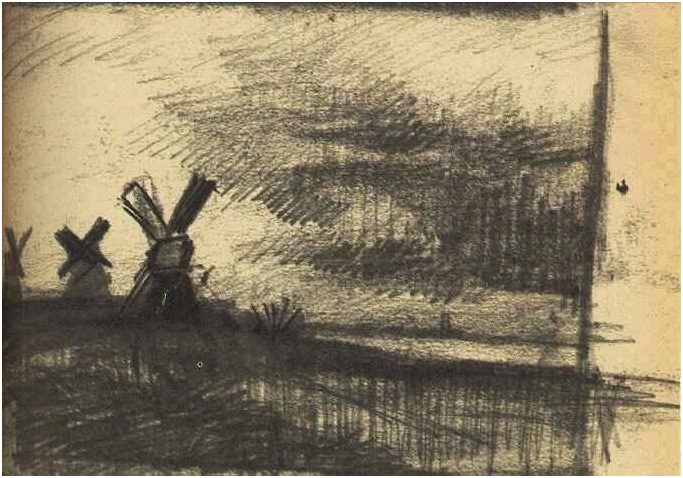
Windmills at Montmartre - 1877
Vincent Van Gogh was born in Groot-Zundert, the Netherlands on March 30, 1853. He was the son of a pastor, and hailed from a long line of artists and art dealers. He became interested in art at an early age, and flourished in Middle school when he received lessons in drawing from a successful artist there. By the time he was 20 years old, he had obtained a job as an art dealer in London, with the help from an uncle. One of the happiest periods of his short life, he sketched and drew in his extra time, when he wasn't dealing in Art. After being transferred to Paris in 1875, he fell on the outs with Goupil & Cie, the company he had been working for, and left them to return to London.
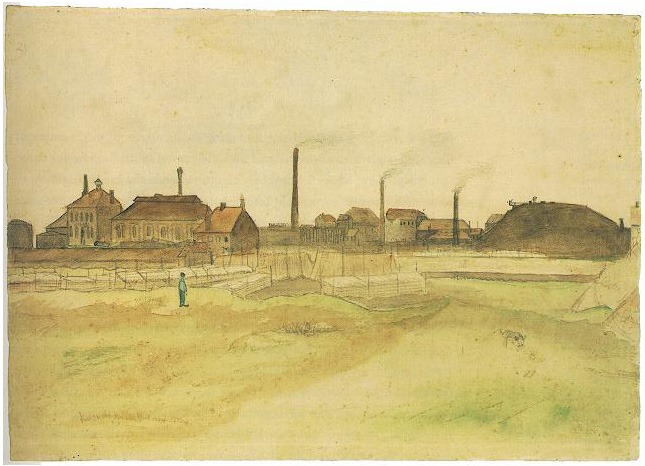
Coalmine in the Borinage - 1879
Disillusioned with the world of art dealers, Van Gogh turned to religion. He had always had a strong religious faith, but by 1876, he felt the urge to devote himself to the Church. He entered the school of theology in Amsterdam, but it quickly became apparent that he would not flourish in this path. He dropped out of school, then failed an admission test to enter a mission school in Laeken. Undeterred, he applied to a missionary post in Borinage and tried his hand at bringing religion to the people there. While his zeal was almost fanatical, the powers that be were not impressed. After only six months, they dismissed him from his post. Despite this, Van Gogh remained in the area for over a year, trying to help the residents of the impoverished area and himself, both living a life of poverty. Ultimately, via suggestions by his brother Theo, he left Borinage behind. With a failed marriage proposal to his recently-widowed cousin, he also left his religious faith as well.
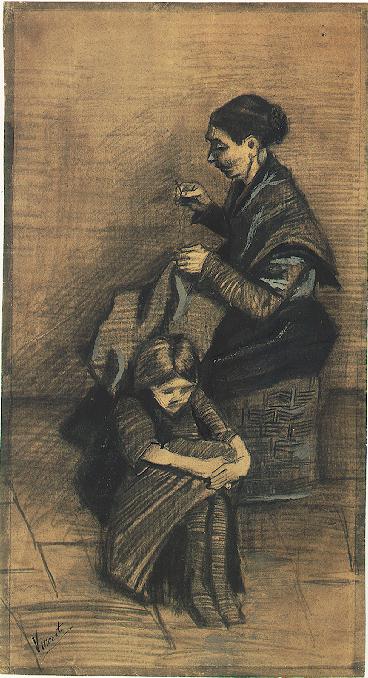
Woman Sewing,
With a Girl - 1883
It was at this point that Van Gogh reacquainted himself with his cousin Anton Mauve. Mauve introduced him to the world of watercolours and oils and ignited in him a new passion. With a career as Artist in sight, Van Gogh flung himself into this new occupation. It was at this time that he also met Clasina "Sien" Hoornik. An alcoholic, pregnant prostitute with a young daughter in tow, Van Gogh fell in love with his dear Sien. Their rocky relationship was marred by poverty and much fighting, but he was devoted to her children and often used Sien as a model. Van Gogh's family was not impressed though and they demanded he leave her. After spending three weeks in hospital, due to a case of syphilis and gonorrhea that he contracted from Sien, he was finally swayed.Van Gogh left her in 1883, after spending just over a tumultuous year together.
The Potato Eaters - 1885
Disheartened by another love lost, Van Gogh returned to his family's home in Nuenen and devoted himself once more to drawing and painting. He spent two years there, often-times sketching peasants. It was during this time that he painted one of his most famous works "The Potato Eaters", although it wasn't until long after his death that it received public attention. Struggling emotionally, financially, and artistically, he decided to move to Antwerp and studied the works of Peter Paul Rubens, as well as Japanese artwork. While his exploration of colour theory helped to broaden his colour palette, his locale only served to deteriorate his health. By 1886, Paris beckoned and Van Gogh moved in with his brother Theo.

Starry Night - 1889
The last few years of this troubled artist's life were incredibly productive, but also fraught with much strife. He lived with his brother Theo for most of the two years he was in Paris and during that time met the likes of Claude Monet, Camille Pissarro and of course Paul Gauguin. The bright colours that were rampant in the Impressionist movement influenced Van Gogh's own palette and suddenly his dark pieces disappeared, replaced by the bright colours that he is most famous for. The break from excess (drink, smoke, poor diet) that he hoped to achieve with a move to Arles, sadly did not improve Van Gogh's lot. While he continued to paint and draw, his health spiralled out of control. He committed himself to an asylum, but even that respite was not enough to save him. On July 27, 1890, the world lost an incredible artist, when Van Gogh shot himself in the chest. Two days later he was dead, from complications during his treatment. Despite the mental and physical illnesses that he struggled with throughout his life, he left behind a legacy of art behind. He painted nearly a thousand paintings, over a thousand drawings and sketches, as well as enough letters (mostly to his brother Theo) to document his incredible journey through life. While he only sold one painting during his lifetime, they now go for upwards of $100 million. Quite the feat, and one that has influenced a myriad of artists since then.

Perhaps its time that your child discovers the magic of this tragic master artist. See you June 16th!

Tuesday, June 5, 2012

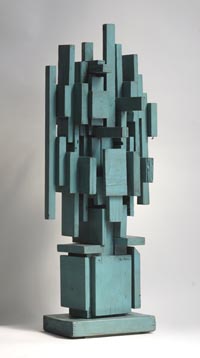
Louise Nevelson: Sculpting Her Vision of Art

"I believe in my work and the joy of it. You have to be with the work and the work has to be with you. It absorbs you totally and you absorb it totally. Everything must fall by the wayside by comparison." ~ Louise Nevelson

And in this vein Louise Nevelson led her life. Over the 88 years that she walked the earth, she worked at creating her own unique version of artwork and was absorbed by it every step of the way. Born September 23, 1899 near Kiev, Russia, Nevelson's life began in a rocky way. Her father Isaac emigrated to the United States in 1902, leaving young Nevelson and the rest of the family behind. Once he had established himself in the lumber industry in Rockland, Maine, the rest of the family relocated in 1905 to join him in the USA. While these stresses brought the family closer together in some ways, they did not make for an easy beginning for Nevelson. That was not enough to keep this up-and-coming artist down though.

Untitled - 1950
When Nevelson came across a plaster cast of Joan of Arc in the Rockland Public Library at the age of nine, she knew that art would be a part of her life forevermore. She began her art career by studying drawing in high school. In 1920, she married Charles Nevelson and moved to New York, where she further studied painting, drawing, singing, acting and dancing. From 1929-30, she studied at the Arts Student League under Kenneth Hayes Miller and Kimon Nicolaides. When her husband moved the family out of the city, she became disillusioned with marital bliss and by 1932 she separated from her husband. Recognizing the importance of this focus on herself, Nevelson flew to Europe to further explore different styles of art. While there, she studied under Hans Hofmann in Munich, as well as worked as an extra in films in Vienna and Berlin.
Sky Cathedral - 1958

Nevelson returned to the US in 1932, where she once again studied with Hofmann. She was introduced to Cubism and collage, which influenced her greatly throughout her career. The following year she met Diego Rivera and worked as an assistant to him on his "Portrait of America" murals. The further she delved into the art scene, the more she embraced a style that was all her own. She began to teach mural painting at the Works Progress Administration in 1935. Despite this, money was tight. Perhaps because of this, the materials she collected for her sculptures were often found pieces, like castoff lumber.

Royal Tide 1 - 1960
It wasn't until 1941 that Nevelson had her first solo exhibition, held at the Nierendorf Gallery. While this helped to bring attention to her Modernist sculptures, success was still slow in coming to her. By the 50s, her reputation had grown and the Museum of Modern Art purchased one of her Sky Cathedral pieces. She travelled to Latin America and the Mayan artwork she came across was soon evident in her newest creations as the decade came to an end, with gold and white taking over from her previous all black pieces.

Dawn's Landscape XXIV - 1975
Finally achieving the fame she sought, the size of her pieces grew into monumental displays. Nevelson's name became synonymous with sculpture, but she also became a figurehead in women's art as a whole. She  challenged the idea that only men could become great artists. The fact that her estate was worth over $100 million when she died in 1988, seems to support the fact that women too could crack that gender bias.


Tuesday, May 29, 2012

IN YOUR HANDS: A Focus on Sculpture

Sample Masterpiece Created
Via the Help of 2 Hands Clay
Budding Artists has a very special treat for you this weekend during our Master Series children's art workshop. Not only will we be featuring Henry Moore on Saturday, June 2, 2012, but the workshops are going to be run by our friends at 2 Hands Clay! They go to birthday parties, classrooms, into the homes of seniors, folks with special needs, and to pretty much any group that desires to play with clay (think church groups, mom & tot groups, women's groups and more), but this week they will be at the London Farmer's Market at 10:30am and 1pm sharing their clay creations with Budding Artists and a lucky group of children. How cool is that?!

Moore's creative process
So why do you think we asked 2 Hands Clay to help out with this week's children's art workshop? For those of you who suggested it was because Henry Moore was a sculptor, you'd be correct! In fact, Moore was well known for his drawings, textiles and graphics, but it was his sculptures that helped to propel him into the role of Master Artist and brought him fame around the world. Just as Budding Artists hopes your children are, he too was interested in sculpture and art from an early age. After briefly serving in World War I, Moore attended Leeds School of Art where he excelled to the point of winning a scholarship to the Royal College of Art in London in 1921.

The creative process of a child
This experience helped to start a career in the arts for Moore that we hope your own budding artists can aspire to as well. The folks at 2 Hands Clay provide the materials and a few ideas to spark some creativity, but the process is all in the hands of the creator. Just as Moore molded his creations from the influences of the world around him, as well as a vision in his mind's eye (plus a maquette or two), so too will your child, under the guidance of 2 Hands Clay, create their own masterpiece. Have clay, will create!

Reclining Figure
Moore created thousands of sculptures over his 88 years, but this weekend the process is all about your kids. Where Moore specialized in fluid forms, African motifs, female figures and family groupings, what form do you think your children will pull out of the clay? His figures were often seen reclining and featured piercings that gave an abstract air to the sculptures. Your child will have an opportunity to mold the piece of clay they receive into a form that works for them, adding colours as their creativity fancies them. With a little more encouragement, perhaps one day your child's creativity and future sculptures will grow larger, just as Moore's did when the demand for his public art commissions increased.

Only time will tell, but giving your child an opportunity to explore is the first step. What do you think your little artist can create in 90 minutes of fun and clay adventure with the help of 2 Hands Clay? Sign your kids up today and watch their vision sculpt the future. See you Saturday!

2 Hands Clay Adventure

Wednesday, May 23, 2012

Pop! A Look at Art Through Andy Warhol's Eyes

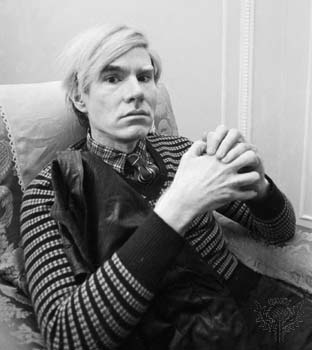
Do you think anything interesting ever happens in Pittsburgh? Well, back on August 6, 1928 Andrew Warhola was born (he would later drop the 'a' from his last name and go by 'Andy'). Son of Rusyn immigrants, the third child of Andrej and Julia might not have taken the world by storm in his earlier years, but things were destined to change. The name "Andy Warhol" would be known the world over and his new brand of Pop Art would take the art scene by storm. And it didn't take long.

In The Bottom of My Garden - 1956
From a young age, Warhol was interested in art. When he became sick and frequently hospitalized in his youth, that love of art and pop culture sustained him. While his illness created a paranoia about hospitals and doctors, it also gave him the time to explore drawing, DC comics and celebrity magazines. These interests remained with Warhol for the rest of his life.

Marilyn Monroe
After graduating from high school, Warhol enrolled at the Carnegie Institute of Technology. By 1949, he had a Bachelor of Fine Arts in Graphic Design. This paved the way for a career as a commercial artist and the work seemed to flow to him effortlessly. He relocated to New York and soon found himself working for the likes of Columbia Records, Glamour Magazine, Harper's Bazaar, NBC, Vogue and more. He began to turn to painting and drawing, and later incorporated photographs into his work.This drew the interest of a variety of museums as well. Warhol had his first exhibit at the Hugo Gallery. The Museum of Modern Art couldn't help but notice this up and coming artist as well, and featured his work in a group exhibit in 1956.

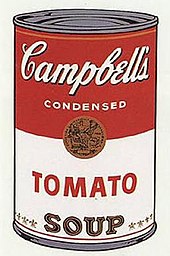
Campbell's Soup - 1968
By the 1960s, Warhol began to embrace what he is now most famous for; some of his iconic pop images. He took everyday images, such as a can of Campbell's soup and immortalized the image in the world of Contemporary Art. Celebrities such as Marilyn Monroe, Elvis Presley, Mohammed Ali and Elizabeth Taylor all graced the images that he created. During this time period, he also began working with silk screening. Warhol was not content to stop there though.

As Warhol's fame continued to grow, so too did the mediums he worked in. In 1963, he recorded his first of many films at "The Factory", his aluminum foil and silver-painted studio. He created such avant-garde films as "Sleep", "Empire" and "The Chelsea Girls", which remain cult classics for many. The year 1968 shattered Warhol's rocket rise to fame when he was shot and nearly killed by a minor figure in "The Factory" scene. While he recovered and continued to create many more films, paintings, album covers and more, his view on life was dramatically altered forever more. Now he saw life as through a television.

It is hard not to still see Andy Warhol's influence on Contemporary Art. He had short films featured on "Saturday Night Live", a guest appearance on "The Love Boat", he co-founded the magazine "Interview", as well as designed album covers for bands such as "The Velvet Underground" and "The Rolling Stones". So how can Budding Artists not recognize this modern-day superstar that was ahead of his time when it came to the world of art and social networking? If you want your child to learn more about Pop Art and Andy Warhol's influence on it, sign them up for this week's children's art workshop with Budding Artists at the London Farmer's Market. Workshops run for 90 minutes at 10:30am and 1:00pm. With a Master Artist like Andy Warhol to draw inspiration from, who knows what your kids will bring home this week!

And finally, I leave you with a sampling of, but one of Warhol's films; Edie Sedgwick's Screen Test.

Tuesday, May 15, 2012

Inspiration: Picasso

Pablo Picasso


The man was a Master Artist. He was a legend that changed the face of art. He influenced the likes of Piet Mondriaan, Diego Rivera, Joan Miró and a whole host of other artists during his lifetime and beyond. His style spanned Cubism and Surrealism, and he worked in such mediums as oils, ceramics, sculpture, copperplate etchings and more. He challenged the art world that he was born into and constantly morphed his style until he died in 1973 at the age of 91 years old.

Budding Artists will be featuring Pablo Picasso this Saturday, May 19th, 2012 at the London Farmer's Market during our Master Series Children's Art Workshop. Workshops are held at 10:30am and 1:00pm, and run 90 minutes in length. Children, aged 5-12 years, will get a chance to learn some art history, discover art techniques that Picasso favoured and take home their very own Picasso-esque artwork made by themselves. What better way to inspire creativity in your child than by learning about how the Masters have made it to fame themselves?

And whether your children make it to the workshop or not, make a point of pulling out some art materials for them to get creative with, as Budding Artists wants to see what your kids can create. Think Picasso and create a masterpiece and you and your family might be on your way to the Art Gallery of Ontario to see the Picasso Exhibition. One lucky winner will win a Family Pass, just by sending in your best Picasso inspired artwork to Budding Artists. Will it be from Picasso's Blue period, Rose period, African inspired period or his claim to fame of Cubism? You are the Master. Budding Artists will be the judge. Contest is open now and runs through to June 25, 2012.

If you need a little more inspiration, watch this short video of Picasso in action. As you can see, his confidence is what makes the pieces he creates. A few brush strokes can be all that is required to bring a piece of art to life. It isn't always about the colour, texture or fancy materials used, rather the artist's eye for the piece they are creating. Picasso was a master at creating art in collage forms, from found objects and as shown here,  with little more than some white paint and a piece of glass. Given a little encouragement and inspiration, think what your child could achieve. Let them follow their heart and create artwork from their soul,  and stand back to see what beauty emerges.


Tuesday, May 8, 2012

Regional Art in Our Backyard: A Look at Greg Curnoe

Self-Portrait - 1992
We have travelled the world, unearthing Master Artists from all corners of it, but today we look no further than our own back yard for the next installment of our Budding Artists Children's Art Workshops. Our featured Master Artist for Saturday May 12th, 2012 will be none other than London, Ontario's very own Greg Curnoe. At 10:30am and 1pm at the London Farmer's Market, Budding Artists will gather children round to explore this local artist, who made his community and its influence on his art, a priority in his life. This lesson, as well as a few other artistic ones, will be explored in 90 minutes of fun and games, art technique, and a little local history as well.

Have you heard of Greg Curnoe? Keep reading to learn a little more about this interesting, local artist!

Greg Curnoe was born in London, Ontario on November 19, 1936. Local Londoners won't find it surprising to hear that he attended Beal High School, which is well known across Canada for its Arts Department. Curnoe followed this up with a short session at Doon School of Art in Kitchener, ON. He then attended the Ontario College of Art in Toronto, ON from 1957-1960, before returning to his hometown.

View of Victoria Hospital,
Second Series - 1969-1971
After leaving the OCA behind, Curnoe moved back to London. He had a passion for art, but this passion was rooted in what he termed Regionalism; which is the belief that Art can and should be found at a local level. He did not believe that it was necessary to move to a big city centre in order to achieve a measure of fame. And he consequently set about to prove that. Along with Tony Urquhart, Murray Favro and Jack Chambers, they established a local art scene that began to turn some heads. This was highlighted by his co-founding of the magazine "Region" in 1961, which ran for nine years, followed  by the establishment of the "Region Gallery" in 1962. By 1973, he had helped to establish the Forest City Gallery as well, which still serves the London and area arts scene. Curnoe even had a voice in the creating of Canadian Artists' Representation (CARFAC) in 1968.

Nice Day, Bad News - 1986
Along with his conviction that art need not be based on a movement, Curnoe also believed that it did not have to fall into a set perimeter of style. He painted the everyday objects that inhabited his world, whether it be the written word, a portrait of his wife or one of his hand-built bicycles. As Curnoe was an avid cyclist, this last object repeated itself frequently amongst his artwork.

Yellow Mariposa
Sadly, his love of bicycles also signalled his demise. While on a group ride in St. Thomas in 1992, a distracted driver plowed into the pack of cyclists.  Several riders were knocked down, with Curnoe numbering one of them. He subsequently died of his injuries, leaving the London area with one less local artist. Even worse was the loss of his strident voice for the artistic community. This week, Budding Artists remembers Greg Curnoe and celebrates all that he did for Canadian art and the Canadian art scene.


Tuesday, May 1, 2012

Spotlight on Diego Rivera

Diego Rivera was born December 8, 1886 in Guanajato, Mexico. The son of school teachers, education was highly valued in his family. While attending Catholic school, he enrolled in the art program at the Academy of San Carlos. He originally attended evening classes there, but his aptitude for the arts was apparent and he became a full-time student two years later, in 1898. Rivera's first public exhibition of his work was held in 1906, which attracted enough attention that by 1907, the Governor of the State of Veracruz had sponsored Rivera to continue his studies in Europe.

Head of a Breton Woman - 1910
Rivera arrived in Europe during a time of great change in the art world. He originally studied with Eduardo Chicharra in Spain, then continued on to Paris, France. It was here that he embraced the up and coming artists of the day, including such notables as Amedeo Modigliani, Moise Kisling, Chaim Soutine, Max Jacob and gallery owner Leopold Zborowski. The Montparnasse district was full of Cubist influences, from the likes of Picasso and Georges Braque and Rivera soon found those influences affecting his own work. By 1917, the artwork of Cezanne also left an impression on Rivera and his artwork now showed signs of Post-Impressionism as well.

Creation (mural) 1922
While Europe left a huge mark on Rivera's art, his heart still belonged to Mexico and he returned to it in 1921. He had spent the past 14 years travelling throughout Spain, France and Italy, but with a more mature style, he found the need to reconnect with his home country and all that it offered. One of those things offered was the chance to leave a lasting public image via murals. At the time the government was pushing for education, equality and a recognition of their culture, which Rivera was perfect for. "Creation" was his first mural, but was just the beginning of his work with this medium, which was further showcased when he joined the Revolutionary Union of Technical Workers, Painters and Sculptors. He followed that up by joining the Mexican Communist Party later that year.

El Vendedor De Alcatraces
His association with the Communist Party was not an easy one though. Rivera was vocal in his political beliefs and often attacked the church and clergy, making him a controversial figure. Despite that, he was invited to visit Russia in 1927. After spending nine months there, he was asked to leave and left with very little to show for his time spent, aside from a few paintings and much disillusionment on both sides about the other parties. Non-plussed, Rivera continued to paint, this time embracing another land and culture, that of the United States.

Section of Detroit Industry - 1933
In 1930, Rivera arrived in San Francisco with his new wife Frida Khalo. The architect Timothy L. Pflueger had heard about Rivera from Ralph Stackpole and subsequently had encouraged him to paint for him in the USA. This proved a successful venture for Rivera and he painted many murals, including "Detroit Industry" at the Detroit Institute of Arts. He spent three years in the US, then returned to Mexico, after furors over his political beliefs. He returned once more in 1940, again by request of Pflueger, this time to paint for the Golden Gate International Exposition.

Over the span of Rivera's lifetime, he created many murals and many more controversies. He had many affairs, often torrid in nature, but his love for Khalo was the one constant at the end of his life. His relations with the Communist Party waxed and waned, but shortly before his death he was allowed to re-establish ties to the party. His beliefs affronted many, but his skill impressed more. And Budding Artists recognizes everything that he accomplished and will be featuring him in this weekend's Master Series Children's Art Workshop. So pack up your kids and ship them off to the London Farmer's Market on Saturday May 5th at 10:30am or 1pm, where they will enjoy 90 minutes of creativity, art history and fun with Budding Artists and famed Mexican artist Diego Rivera. A perfect activity for them to celebrate art and Cinco de Mayo too!

Monday, April 16, 2012

A Point About Georges Seurat

"Some say they see poetry in my paintings; I see only science." ~ Georges Seurat

Shall we get straight to the point today? We are talking about Georges Seurat. He was a French painter. He was born on December 2, 1859 and he revolutionized the art scene with his new fangled approach to art called Pointillism. In his short 31 years on the planet, he painted over 60 canvases, filled many sketchbooks full of drawings and was instrumental in ushering in Neo-Impressionism. Sadly, he passed away March 29, 1891, but left behind some of the most impressive examples of artwork that exemplified his interest in colour, linear movement, and indeed the science behind art as a whole.

Bathers at Asnières
So what exactly is pointillism and how did Seurat introduce it to the world? While Seurat was encouraged to pursue his artistic interests via relatives, and attended the École des Beaux-Arts from 1878-1879, it wasn't until he struck out on his own that his art blossomed. He discovered the Impressionist painters of the day and realized that he did not have to be limited by rigid academic dictates. It was at this point that he began studying colour, light and began experimenting with tiny brush strokes that evoked a bigger picture when looked at from afar.

The Gardener
In fact, the more that Seurat studied the science behind vision and colour, the more he developed his own style. He used tiny dots of colour, to form his paintings and in such a way added immense depth to his canvases. By 1884, he helped to found the Société des Artistes Indépendants, with artists such as Maximilien Luce and Paul Signac. Signac was to become a good friend of Seurat's and ultimately followed in his artistic footsteps. By the time the two artists exhibited their work in Brussels in 1887, alongside other artists who were also using a pointillist style, they decided to form a new group and called themselves Neo-Impressionists.

Young Woman Powdering Herself
While Seurat continued to paint, disagreements between members of the newly formed Neo-Impressionist movement soon found him withdrawing from the formal group. He met Madeleine Knobloch in 1889 and became smitten with the young, simple woman (who is the model for Young Woman Powdering Herself). The two had a child together, but Seurat suddenly became ill shortly thereafter. He left an unfinished painting ("Circus"), as his last piece before his death. His infant son died shortly thereafter, probably of the same illness (unproven, but quite possibly their deaths due to diptheria). What was not lost though, was a new style of painting that influenced the likes artists to come, such as Van Gogh, Gauguin and Lautrec.

Budding Artists hopes to influence a whole new generation of artists this Saturday April 21st at the London Farmer's Market during our weekly children's art workshop. Georges Seurat will be our Master Artist to explore, as children learn a little art history, have a lot of fun and get to bring home their very own Seurat-inspired artwork made by themselves. Workshops are held at 10:30am and 1pm and run for 90 minutes, so register today to make sure your child gets to enjoy artwork with a point.

I offer you a moment to enjoy and explore one of Seurat's most famous paintings "La Grande Jatte", set to music. Can you remember what movie this famous picture was featured in and who got lost in the little girls face?


Tuesday, April 3, 2012

The Subject I Know Best: Frida Kahlo

Meet Frida Kahlo, born July 6th, 1907 in Coyoacán, Mexico. This Mexican artist is well known for her surrealist paintings, but most especially for her self-portraits. Plagued by troubles throughout her life, she still managed to paint 143 paintings of which 55 of those were self-portraits. As she was often bed-ridden, she was
"...the subject I know best",
hence finding herself so often among her portrayals. What was it about her life that led to her inward eye though? Let's take a look...

Self Portrait -1926
Kahlo was a young girl at the start of the Mexican revolution (began 1910) and as such, was often exposed to the violence that occurred outside her door. The "Blue House", her childhood home and residence later in life, may have protected her from some of the ills of war, but it could not protect her from illness, and at the age of six she developed polio. While she survived, Kahlo was to bear the scars of her illness in the form of a thin and stunted right leg. She learned to cover up this deformity, but tragedy was to strike again. On September 17, 1925 Kahlo was in a serious bus accident that left her bedridden for upwards of a year recovering from multiple injuries, that included a fractured spine and collarbone, broken ribs and pelvis, as well as multiple injuries to her right leg and foot. Sadly, her uterus was also damaged in the accident, meaning that at the age of 18, she was humbled by the knowledge that she would never have the opportunity to bear children.

What the Water Gave Me
As doctors questioned whether Kahlo would live, she herself refused to give up. She underwent over 30 surgeries, but took the time while she was recovering to delve into a new talent, that of painting. With her dreams of medical school behind her, she refocused on her artistic endeavours and began to paint portraits of herself, family and various friends. The colour and form were derived from her Mexican roots, but the style was all her own.

Self Portrait - 1940
It was via her budding artistic career that she met Diego Rivera, a well-known local muralist. Despite their difference in size (he was 300lb and she a mere 98lb) and age (he was 20 years her senior), they found themselves quickly entwined and by 1929 they were married, despite her mother's disapproval. While their original interest in art and communism drew them together, their differences made for a volatile union. Both of them had extra-marital affairs (Kahlo with both men and women), that brought them to divorce each other in 1939. It would seem that the old adage of "can't live with 'em and can't live without 'em" was in evidence for this couple though and they remarried again in 1940.

The Love Embrace of the Universe,
the Earth (Mexico), Me,
and Senor Xolotl
Throughout her pain-riddled life, Kahlo turned to the easel to help her through the turbulence. Her personality was large and flamboyent, as was so often portrayed on her canvases. She drew on images from her Mexican culture, as seen in the variety of monkeys, birds and brightly coloured flowers that graced her paintings. Often enough, her brooding eyes were the first draw for the viewer though. While she had various showings of her work in the USA and Europe, it wasn't until 1953 that she had her first exhibition of her work in her native land. While time would bring more fame to this spunky Mexican artist, her life was cut short by her death on July 13, 1954.

This weekend, Kahlo's fame lives on as Budding Artists features her in their Children's Art Workshop at the Western Fair Farmer's Market. Register your child today for either the 10am or 1pm 90-minute workshop, so that they can explore her style while creating artwork all their own. See you then!